
Ireland's Leading Registered Electrical Inspection & Compliance Specialists
Fully insured, Safe Electric registered contractors delivering certified periodic testing, legislative compliance audits & advanced thermal diagnostics for commercial, residential & industrial properties nationwide.
Trusted By Ireland's Best




































Residential & Commercial Electrical Inspection and Compliance Services
Periodic Inspections
Fuse Board Upgrades
Landlord PAT Testing
& More
Residential Services & Landlord Compliance
Commercial EICR
Emergency Lighting
Thermal Imaging
& More
Commercial Services & Maintenance
Residential & Commercial
Our Specialised Electrical Inspection & Compliance Capabilities
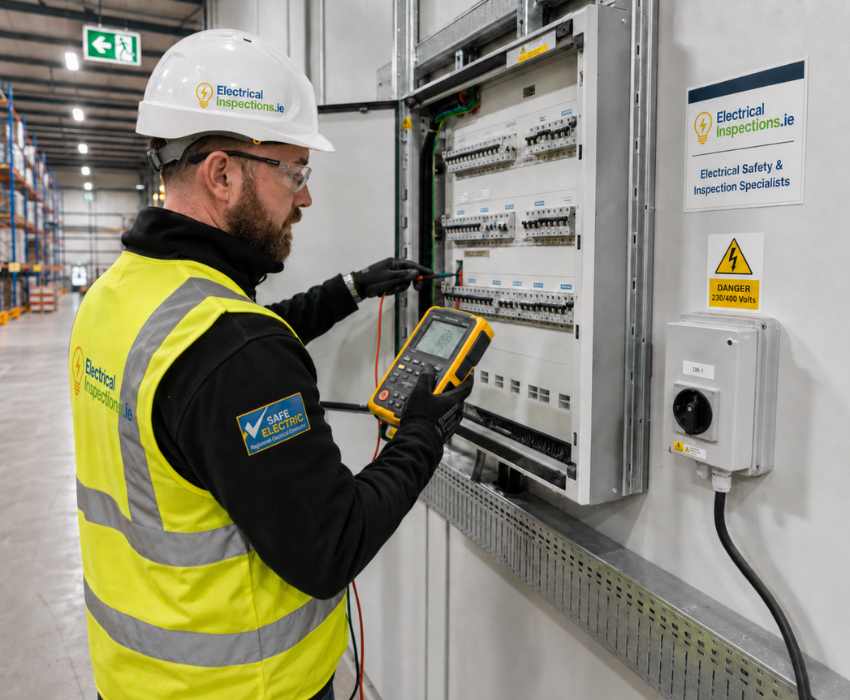
Periodic Electrical Inspections (PIR / EICR)
Electrical installations silently degrade over time. Our comprehensive diagnostic testing tracks circuit integrity, earth fault loop impedance and RCD safety systems to stop lethal shock and fire hazards early. This vital check satisfies HSA workplace regulations, landlord statutory criteria and insurance validation requirements.
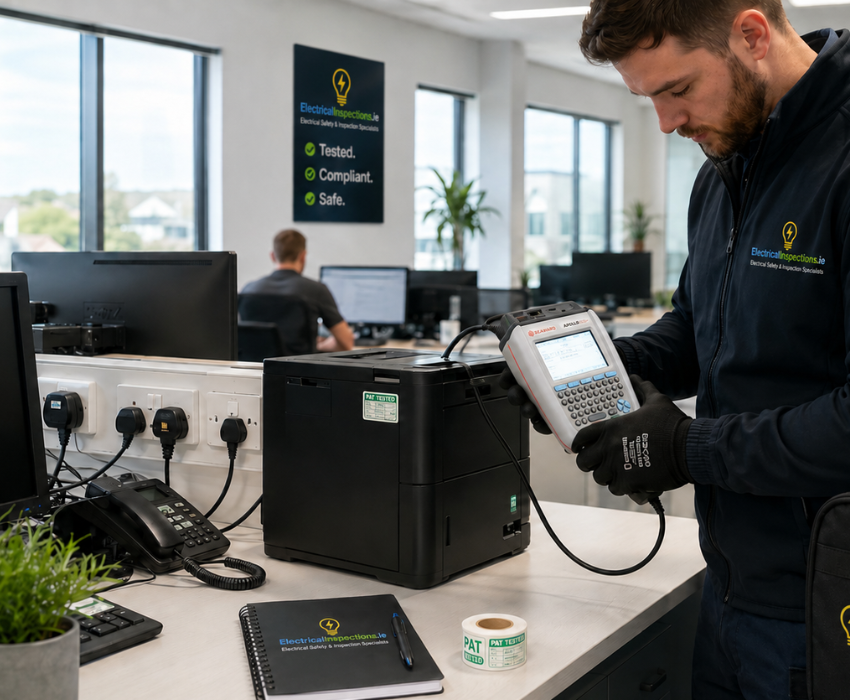
Portable Appliance Testing (PAT Testing)
Any electrical device with a flexible lead and plug—from office laptops to industrial machinery—poses a hidden risk. Under Irish law (S.I. No. 299 of 2007), employers and property managers hold 100% of the liability for appliance safety. Our structured testing protects staff, ensures compliance and insulates your business from expensive personal injury claims.
Preventative Electrical Thermal Imaging
Electrical faults emit hidden heat long before causing a fire or a sudden building blackout. Using advanced infrared thermographic cameras, we scan consumer units and heavy-load switchgear panels under real-time conditions to pinpoint loose links or component overloads. This predictive, non-destructive testing causes zero disruption and frequently helps lower corporate insurance premiums.
Emergency Lighting Inspections
As an IS 3217 Certified service provider, we ensure emergency lighting automatically illuminates building escape paths if normal power fails. Serving commercial premises, schools, and public spaces nationwide, we execute rigorous system testing with reference to strict I.S. 3217:2023 standards. Our precise testing tracks backup batteries, signage, and visibility to keep your property inspection-ready.
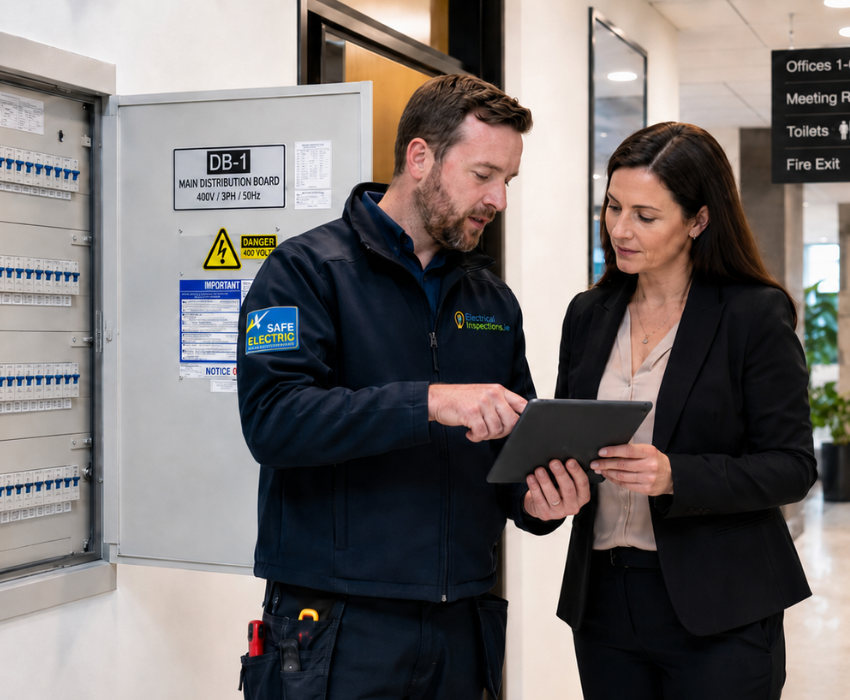
Comprehensive Safety Audits
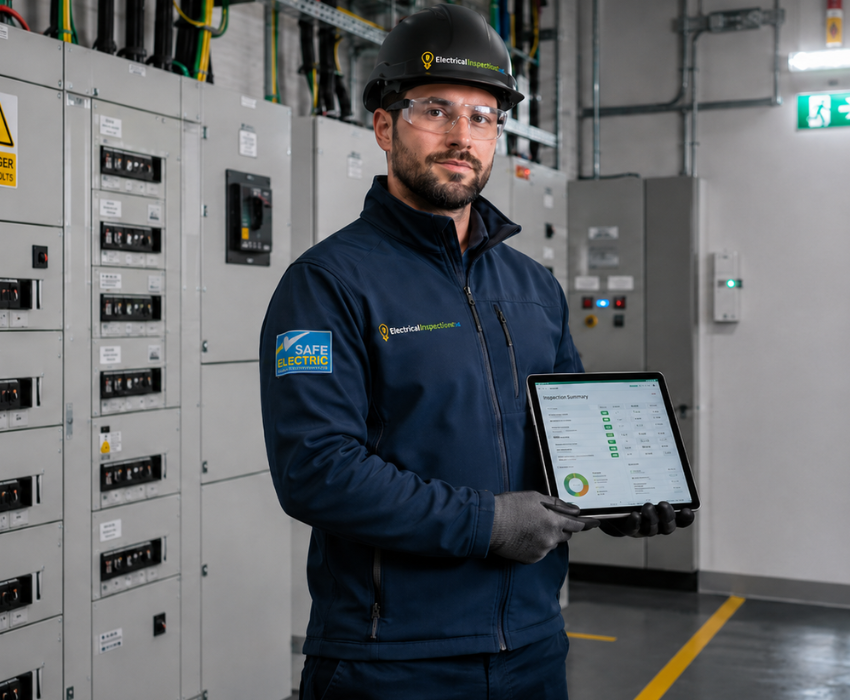
Our comprehensive electrical safety audits ensure your business remains compliant by reviewing previous PIRs, emergency lighting records, PAT testing, and thermal imaging reports. We can digitize your data, organize compliance documentation, and establish a planned routine inspection schedule. If we identify defects or overdue inspections, we provide clear remedial recommendations and area-by-area cost estimates to help you prioritize works, giving you a clear safety overview and a structured plan for ongoing compliance.
Dedicated Installs & Maintenance Division
We don’t just hand you a report of electrical faults and walk away—we close the complete compliance loop. If a site test surfaces an “Unsatisfactory” status or circuit failure, our dedicated Installation and Maintenance team delivers an immediate fix. From statutory remedial works and fuse board modernizations to structured preventative maintenance contracts, we handle everything under one trusted banner.
Why it matters
Statutory Compliance & Fixed Intervals
Irish Legal Obligations & Recommended Testing Frequencies
Under Regulation 89 of the Safety, Health and Welfare at Work Regulations (S.I. No. 299 of 2007), employers and property managers are legally mandated to maintain electrical installations in a safe condition. Failing to produce valid verification documents can leave a business entirely exposed to heavy liability claims and insurance invalidation.
Through rigorous risk assessments and national guidelines, your property must be inspected and certified by a competent person according to the following fixed parameters:
Commercial Offices, Retail & Hospitality
Annually
Every 5 Years
Industrial Plants & Agricultural Sites
Annually
Every 3 Years
Residential Rental Accommodations
Annually
Every 5 Years (or Change of Tenancy)
Construction & Maintenance Sites
Every 3 Months
Every 6 Months












Testimonials
What Our Customers
Say About Us
Frequently Asked Questions
Will high-voltage diagnostic testing damage my modern smart devices or office computers?
No. Standard insulation resistance testing involves sending high-voltage signals through circuits to detect degradation, which can easily fry modern smart home hubs, server arrays and sensitive workplace IT boards if done carelessly. Our qualified technicians utilise specialised, low-current testing protocols specifically designed to isolate and protect your sensitive modern electronics while still verifying the hidden wiring infrastructure safely.
Can my own staff perform the recommended electrical visual checks?
Yes, absolutely. The Health and Safety Authority (HSA) guidance explicitly states that routine visual checks do not need to be carried out by a qualified electrician. Anyone who uses the equipment safely can look for obvious defects like loose casing screws, signs of overheating or frayed cables. However, if your staff uncovers a visual defect, the item must be removed from use immediately until a certified competent contractor tests and repairs it
How often should we manually test our property's RCD safety switches?
Independent of any formal professional inspection schedules, the national standard recommends that property owners or safety managers physically press the “TEST” button on all Residual Current Devices (RCDs) at least twice per year. This simple manual action ensures the internal mechanical trip springs operate instantly to protect people from direct contact shocks.
What are the specific visual check frequencies for construction sites?
Due to the harsh environments, frequent movement and mechanical stress on building sites, the safety intervals are much stricter than standard offices. Temporary construction power installations and high-voltage distribution kiosks require a formal visual check every 3 months and full diagnostic certification every 6 months.
Are there different electrical compliance regulations for petrol stations and bulk storage sites?
Yes. Properties that handle explosive atmospheres or flammable substances are bound by specialized timelines under the Dangerous Substances Act. Retail and private petrol stations must have their fixed installations fully tested and certified at least every 3 years, while bulk storage facilities require formal testing every 12 months.
What classification of appliances are checked during a PAT testing routine?
Portable Appliance Testing applies to two distinct types of gear drawing power via a flexible lead and plug. Class 1 equipment features basic insulation and relies entirely on an earth connection for safety (like kettles, microwaves and heavy machinery). Class 2 equipment relies on double or reinforced insulation and does not require an earth bond, identified by a double-square symbol on its rating plate (like office laptops, chargers and power tools).
How long must I legally keep our Electrical Installation Condition Reports (EICRs) on file?
Under national safety guidelines, all official numbered condition reports and electrical safety certificates must be securely retained for at least ten years. These documents must be made readily available to any future electrical contractor or safety auditor to track the ongoing degradation or modification history of your building’s wiring infrastructure.
Protect Your Property with Ireland's Electrical Safety Specialists
Secure your booking slot today with ElectricalInspections.ie, where our central team in Dunboyne coordinates fully registered Safe Electric inspectors to test, fix and certify your premises